









Foot & Ankle Arthritis & Joint Care
Osteoarthritis of the Foot, Ankle, Midfoot & Subtalar Joint
Causes, symptoms, and treatment for osteoarthritis of the foot and ankle, with care at 15 clinics across Middle Tennessee.
Understanding osteoarthritis of the foot and ankle and your options.
Osteoarthritis is the slow wearing down of the smooth cartilage that cushions a joint. In the foot and ankle it can affect the big toe, the midfoot, the ankle, or the subtalar joint under the ankle.
It is more common with age and after past injuries. The pain usually builds slowly, and early care can keep you walking comfortably.

Symptoms
Signs of osteoarthritis of the foot and ankle.
If you notice these signs, an exam can give you clear answers.
- 01
Aching and stiffness in the joint, worse after rest
- 02
Swelling or a bony bump over the joint
- 03
Pain with long walks or on hard floors
- 04
Less motion in the foot or ankle
Why it happens
What can cause osteoarthritis of the foot and ankle.
- 01
Years of normal wear on the joint
- 02
Old sprains, breaks, or joint injuries
- 03
Flat or high-arched foot shape
- 04
Family history of arthritis
Diagnosis and care
How we treat osteoarthritis of the foot and ankle.
Step 1 · Diagnosis
We check joint motion, swelling, and how you walk. Weight-bearing X-rays show narrowed joint space and bone spurs. An MRI or CT scan may help plan care if the picture is not clear.
Step 2 · Treatment
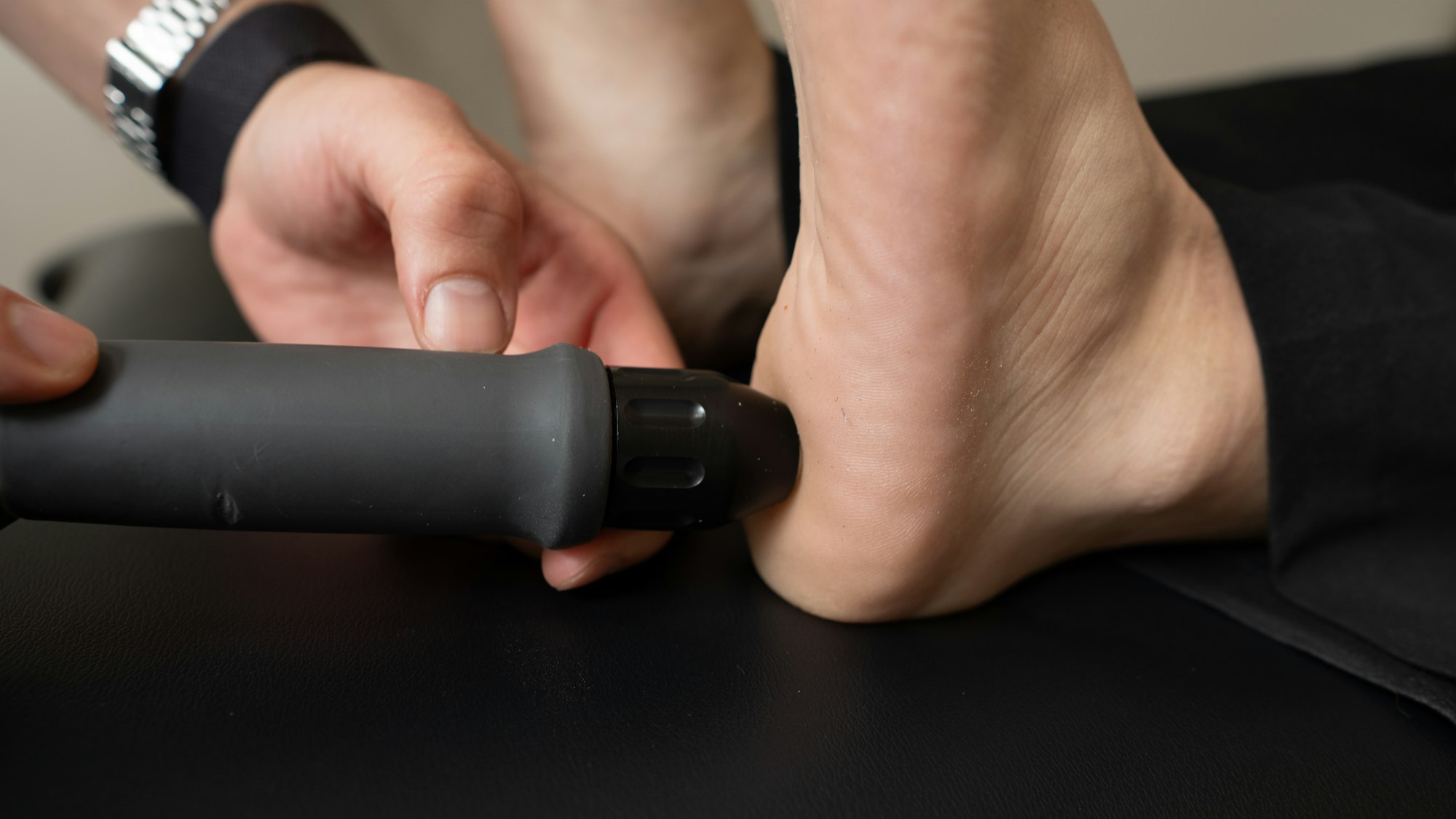
Supportive shoes with a stiff sole can take stress off the joint. Custom orthotics, braces, and sometimes a rocker-bottom shoe help you move with less pain. Physical therapy keeps nearby muscles strong. Injections may calm flare-ups for a time.
When pain limits daily life despite other care, surgery can clean up the joint, fuse it, or in some ankles replace it. Your surgeon will match the option to the joint and your goals.
Recovery
What to expect over time.
Non-surgical care often brings steady relief over several weeks, though arthritis is ongoing. Surgery recovery is often three to six months, sometimes longer.
When to book
Do not wait it out.
See a podiatrist if joint pain or stiffness lasts more than a few weeks or limits your walking. Come sooner if a joint becomes hot, red, and swollen.
Call 615-220-8788Related care
More in Foot & Ankle Arthritis & Joint Care.
FAQ
Your questions answered.
Can I still exercise with foot arthritis?
Yes, low-impact choices like cycling or swimming are usually gentler on the joints.
Does arthritis always get worse?
It often progresses slowly, but good shoes and support can reduce symptoms for many years.
Get help with osteoarthritis of the foot and ankle.
Where we treat it
Osteoarthritis of the Foot, Ankle, Midfoot & Subtalar Joint care at 15 clinics.
- Brentwood10644 Concord Road
- Clarksville1762 Memorial Dr
- Columbia1215 Hatcher Lane
- Cookeville120 Walnut Commons Lane, Suite A
- Gallatin179 Hancock St, Suite 300
- Goodlettsville824 Wren Rd
- Hermitage3901 Central Pike, Suite 353
- Lebanon430 West Main Street
- Mount Juliet2628 North Mount Juliet Road
- Murfreesboro536 N Thompson Ln, Suite F
- Nashville300 20th Avenue North, Suite 103
- Pulaski306 South 7th Street
- Shelbyville120 Frank Martin Rd, Suite 200
- Smyrna693 President Pl, Suite 103
- Waverly110 Hillwood Drive